Balba Bossa presents
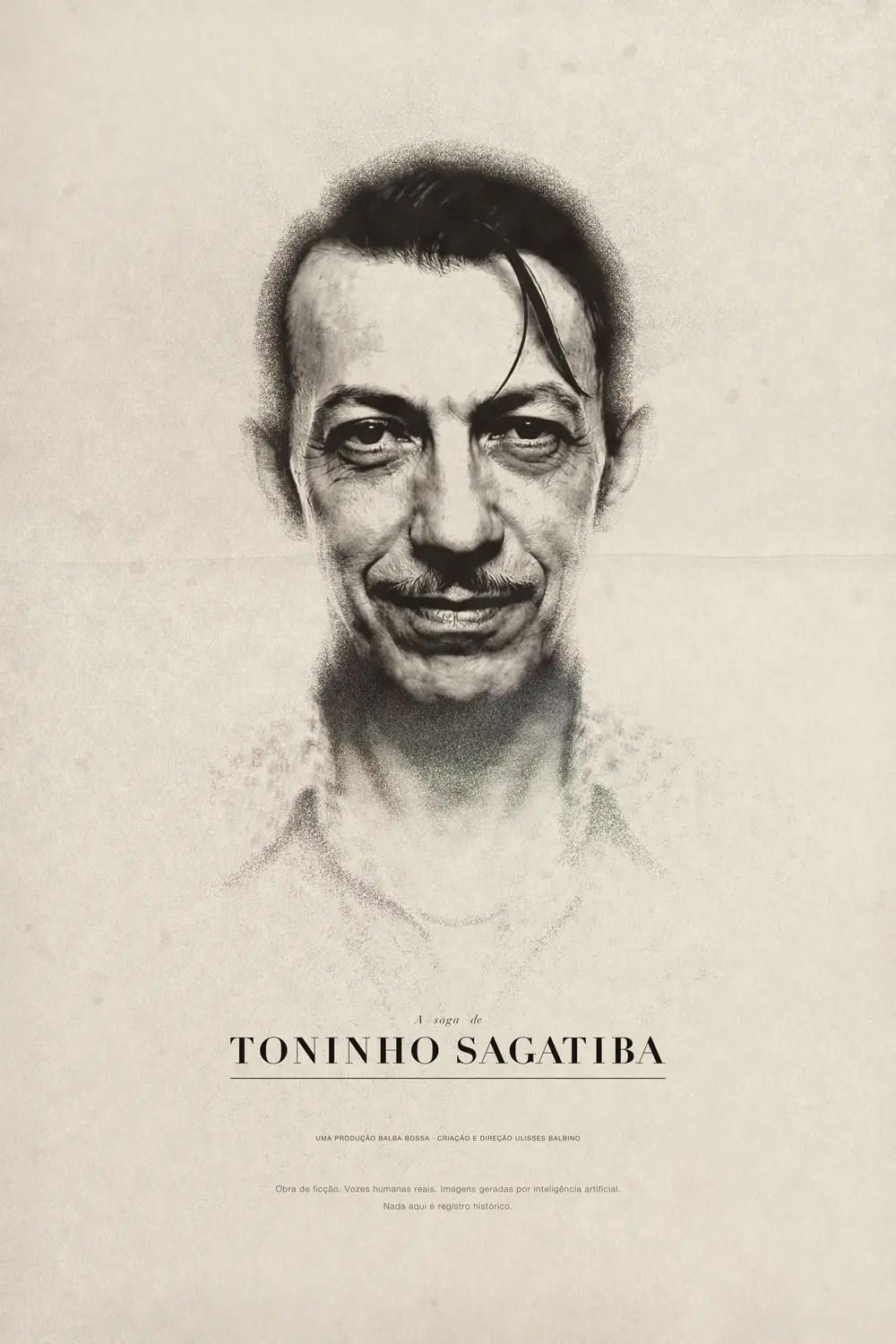
A Saga de Toninho Sagatiba
Dramatic comedy in mockumentary form. Pilot, 7min46, and 8min45 with credits. Brazil, 2026.
Toninho Sagatiba walks down the hill in São Paulo's Zona Norte and never comes back. The people who stayed swear they knew him, and each tells a whole different life.
The pilot
The opening title sequence, 34 seconds, taken from the pilot itself.
The pilot runs 7min46 and it is produced. It has not been published on an open platform, because that would burn the premiere window at festivals.
The password protected screener is still to be issued, and the production sends it out together with the press material.
The password protected screener sits behind the curation door, and the access code is sent by the production together with the press material.
Festival curation and press Buyers, co-production and licensing
Synopsis
Toninho Sagatiba was the most talked about man in a Zona Norte that maybe never existed like that. Nobody tells his life the same way twice. One day, out of nowhere, he vanished. In the pilot, six who stayed sit in front of a camera to say who he was. Bubu, the mother. Bianchi, his friend from their teens. Claudin, the next-door neighbor. Penugi, the youngest of the group. Palanque, the bishop. Paráda, the musician. Each remembers a different Toninho, and remembers with absolute certainty. Nobody even agrees on which year it happened.
The six
-
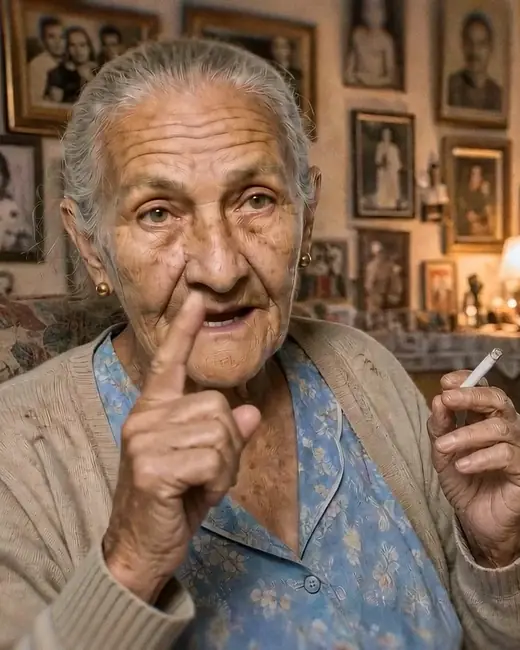
Bubu
Toninho's mother. An old lady who lights one cigarette off the last. Lives with her aunt, Zélia, one of those cases where the nephew is older than the uncle. She is the one who tells how it all started.
-
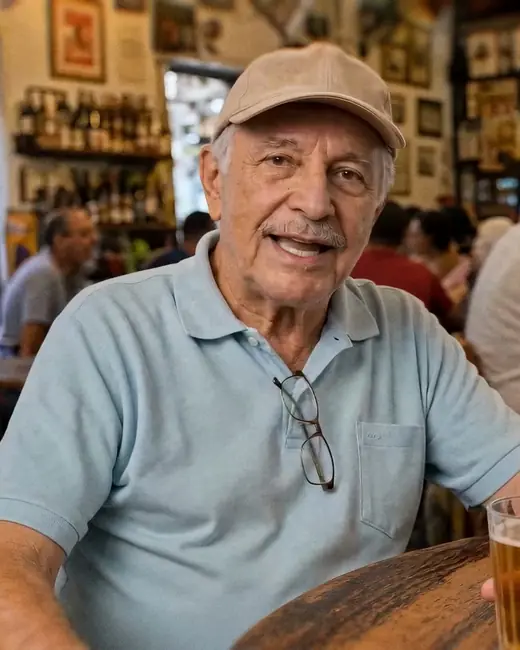
Bianchi
Toninho's best friend when they were teenagers. An old-school night owl, easy life. Member of the tennis club, where he plays tennis very badly. Misses the 70s.
-
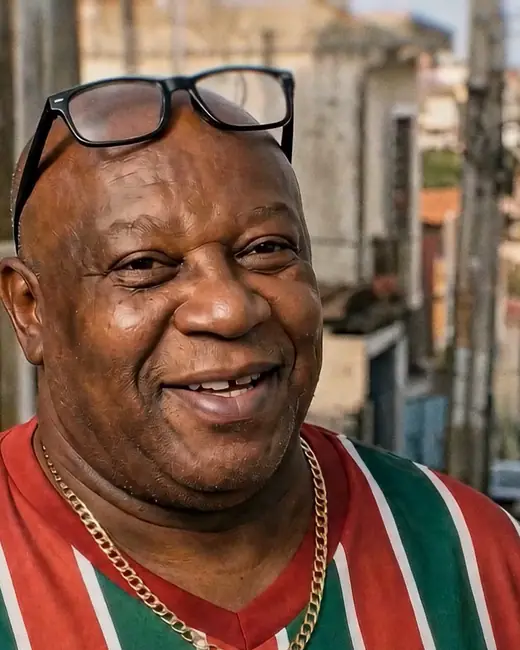
Claudin
From Rio, the next-door neighbor. Up for anything, friends with everybody. He trusts everybody, so he lends money to the whole street. Plenty of people never paid him back and disappeared. He and Toninho were always winding each other up around the neighborhood, but it was a joke. It was how the two of them talked to each other.
-
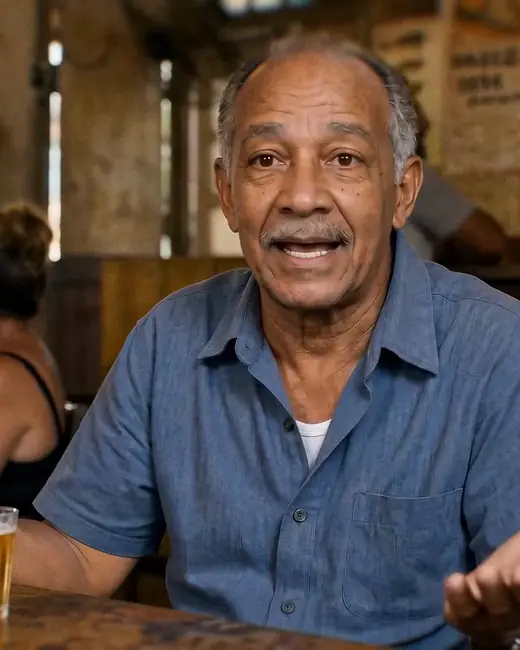
Penugi
Claudin's cousin, the youngest of the group. Always did what he was told. He has ADHD and never got it treated. He tells about the day Toninho took him out for a ride.
-
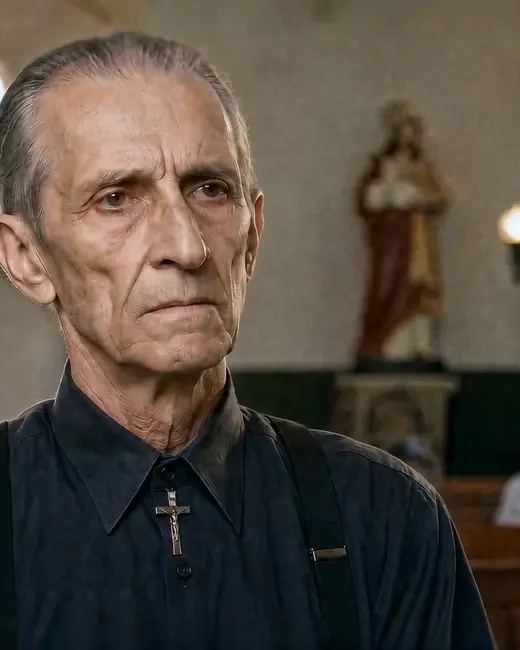
Palanque
The parish bishop. Takes everything so seriously it turns funny. He does not laugh at anything, and he says things nobody can hear without laughing afterward. He is the only one who never stopped at the bar. Toninho confessed too much, and that bothers him. He thinks the man was a mystery. But the priest knows more than he tells.
-
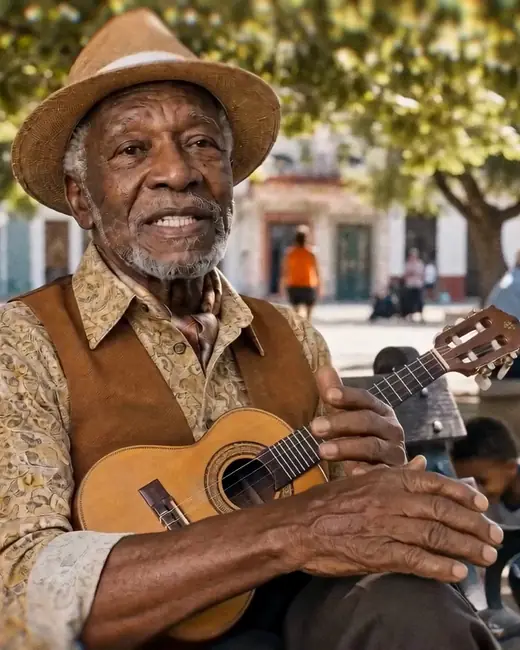
Paráda
The musician of the group. He would bring his cavaco to the bar. He played very badly, and nobody ever had the heart to tell him. The one who really played well was Toninho, who carried the singalongs at the bar do Portuga.
Where the group met. At the bar. All of them, except Palanque.
Four more sit down in the first season: a hairdresser, the loan shark's son, an eighty one year old Ukrainian and a woman from Guarulhos. Six in the pilot, ten interviewees in season 1, and one actor in every voice.
Format
- Title
- A Saga de Toninho Sagatiba
- Genre
- Dramatic comedy in mockumentary form, built entirely out of testimony. Brazilian neighborhood legend.
- Episode duration
- Pilot produced at 7min46. Copy with end credits and the transparency card, 8min45. Series episode of 26 minutes.
- Season
- First season designed as 8 episodes of 26 minutes, with ten interviewees, six of them already in the pilot. One host and one new arrival per episode. Self contained episodes, with an accumulating arc underneath. Five seasons mapped, with no ceiling on the design.
- Voice cast
- One actor, eleven voices. Ten interviewees and one figure who speaks without giving testimony.
- Language
- Brazilian Portuguese, spoken. The people who testify do not all come from the same place, and the accents are not made uniform.
- Country and year
- Brazil, 2026.
- Production company
- Pichorra Filmes, São Paulo. Balba Bossa, an arm of Pichorra Filmes, takes the screen credit.
- Status
- Produced, not finished. Cut locked, 466.54s, 3840x2160, 24p. End credits and the transparency card on the use of artificial intelligence already applied in a copy of its own, 524.9s. Still pending: one level correction.
- Expected rating
- 14 years, under the Brazilian classification system.
- Audience
- Primary core of 28 to 49, socioeconomic bands B and C, capitals and metropolitan regions, heavy consumers of Brazilian comedy on streaming. Secondary core of 50 to 70, who come in through neighborhood memory and stay for the humor. Expansion core of 18 to 27, who turn testimony into vertical clips. Every neighborhood in Brazil has its own Toninho, and that is what makes the series travel.
- Positioning
- A comedy of testimony about a neighborhood that cannot stop telling a man who may never have existed.
- Domestic comparable
- Choque de Cultura, for market proof: a fake format built on characters, with few performers, that became a circulation phenomenon and then became a series.
- Primary window
- National premium streaming, full season. Adult late night slot.
The series does not need a new arc every season. It needs new people remembering.
How it was made
One author, alone in São Paulo.
One author, alone in São Paulo, made a mockumentary about a neighborhood legend using his own voice for every character. The characters were not written, they were recorded: phone voice messages, improvised to make a friend laugh, before there was any project. He is a comedian by trade, out of MTV and radio, and he has been doing these characters ever since WhatsApp existed. The performance is his and it is real; what is missing is a script, an actor being directed, and a second take. The image was built afterwards, on top of a performance that had already existed for years.
The image in the pilot is entirely generated. There is no human cast on screen, there was no shooting day, and not one location in the film was filmed. The testimonies use the creator's original recordings, and the lip sync was built on top of them, respecting every stutter, every swallowed laugh and every sentence the improvisation left half finished. Nothing was cleaned up to sound tidier.
All image and video generation runs through Higgsfield, operated through MCP inside Claude Code, which is the single point where the models are called. Editing and finishing in Adobe Premiere Pro. ffmpeg came in for the archive image treatment and the technical processing, never for the edit.
This work is fiction. No interviewee represents a real person. Toninho Sagatiba is an invented character. The faces and bodies of the interviewees are generated and do not correspond to existing people. Material presented as period archive is of two kinds: real documentary footage in the public domain, identified as such, and generated reconstruction, which is not a historical record and must not be treated as one.
The author
Ulisses Balbino
Ulisses Balbino is creator, writer, director and the voice of every witness in A Saga de Toninho Sagatiba. An underground comedian and storyteller since childhood, he works in São Paulo, under Balba Bossa.
The method starts in the mouth. Nobody is a character until improvised audio gives him a tic, a verbal habit and an opinion of his own. Toninho Sagatiba was born that way, in voice messages recorded on a phone to make a friend laugh, with no script, no second take and no intention of becoming a film. It is an old habit: ever since WhatsApp existed he has been sending character audio to friends, one by one. The six witnesses arrived together, in a handful of audio messages shaped as a mockumentary and sent to a childhood friend, before there was any project.
From directing to editing in Adobe Premiere Pro, from character design to the finish, the pilot was made by one person, with artificial intelligence tools in place of art crew, set design and extras, never in place of authorship. Balba Bossa is dedicated to Brazilian character comedy.
Director's statement
Before any of it, the BÉGA
I founded Pichorra Filmes and I work there today as director. Balba Bossa came later, and it came for a specific reason: I have severe ADHD (apparently), and for years it buried a good number of my own projects (the excuse is mine and I get to pick whichever one I want). Balba Bossa exists to dig those things back out and give them a life.
Before that, from 2007 to 2012, I worked at MTV, on the comedy series Gangbang. The same character later moved to radio, called in by Ronald Rios for Oráculo, on Jovem Pan. I was forever inventing unpredictable stories that made perfect sense. In my head.
In 2012 I founded Pichorra with Lisandra Barros, my partner at the time in work and in life, a brilliant mind I was lucky to meet, and with whom I have a daughter today.
All of it started much earlier, in childhood, in one of those BNH housing blocks we used to call the BÉGA. That is where every character I would go on to create was born.
But that is another story.
Ulisses Balbino
Contact
Talking to the production
A Saga de Toninho Sagatiba is ready to screen as a pilot and open to co-production, licensing and development of the first season.
Ulisses Balbino
Creator, writer and director, Balba Bossa
- City
- São Paulo, Brazil
Buyers, co-production and licensing Festival curation and press